
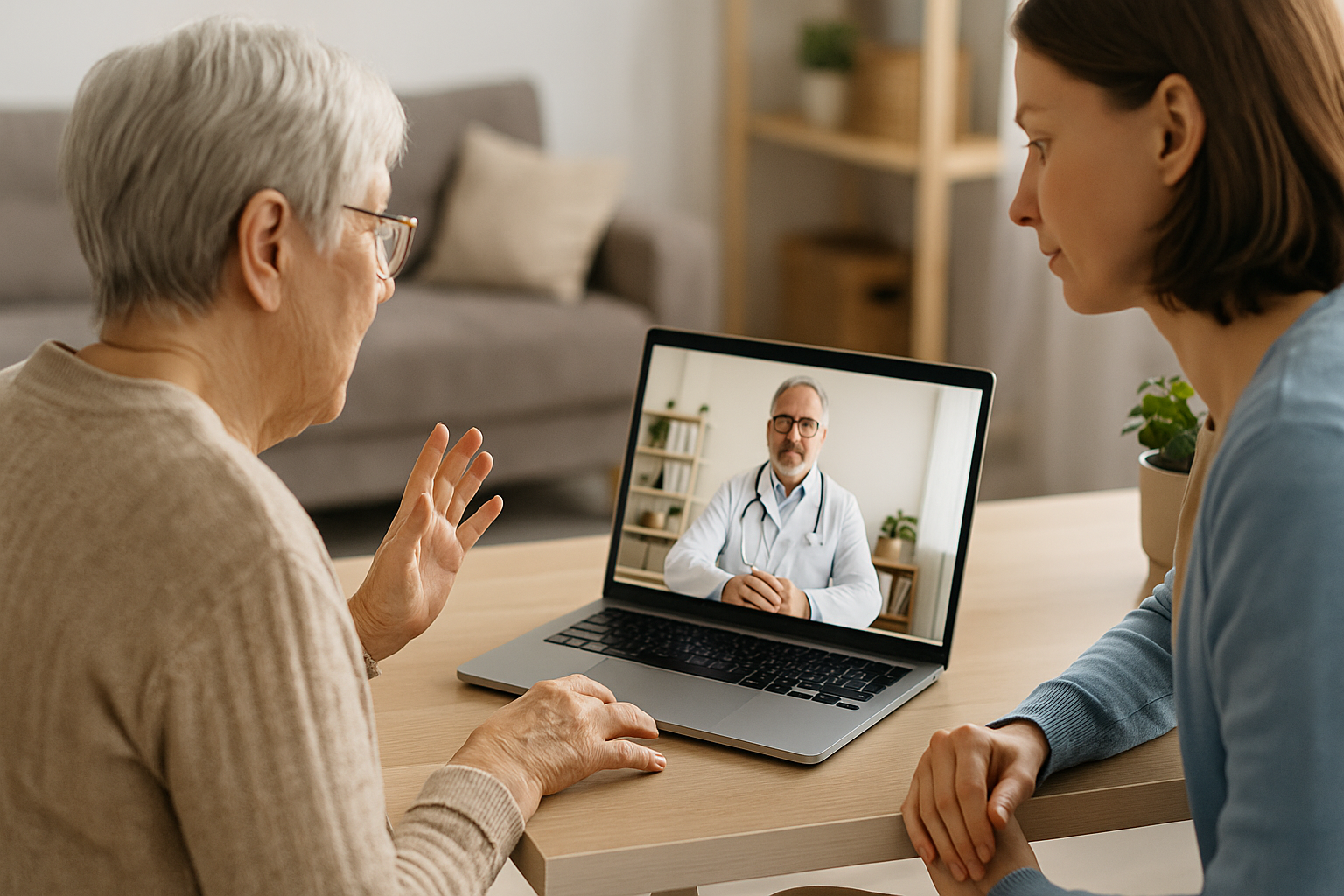
When the Doctor Is a Screen: Telehealth Hurdles for Older Cancer Patients
By Keri Campbell Seay, Founder & CEO, Islands Against Cancer, Inc.
In today’s world, more and more cancer care is happening through a screen. For many older adults, that shift can feel overwhelming. The same technology meant to bring care closer sometimes makes it feel farther away.
The rise of telehealth in oncology
Since the COVID-19 pandemic, telehealth has become a normal part of cancer care. At its height, tele-oncology visits increased from less than 1% to more than 30% of all visits nationwide (Journal of the National Cancer Institute, 2024). For younger patients, this was often a welcome change. For older adults—especially those managing multiple chronic conditions—it introduced a new set of challenges.
Common hurdles older patients face
Many aging cancer patients tell us that telehealth feels less personal and more complicated. Here are a few reasons why:
- Technology barriers: Setting up Zoom or MyChart for the first time can feel like learning a new language. Some patients don’t own a smartphone or a reliable computer.
- Sensory and cognitive issues: Vision changes, hearing loss, or “chemo brain” make it harder to follow instructions or interpret what’s on screen.
- Connectivity problems: Broadband access is still limited in many rural or low-income areas.
- Comfort and trust: Some patients feel they can’t fully express themselves or read their doctor’s body language online.
Imagine an older patient trying to adjust their screen, unmute their microphone, and find the “join” button while feeling anxious about their scan results. It’s a situation that happens every day in oncology care.
Making telehealth work for older patients
Telehealth is not inherently bad—it’s powerful when done right. Here’s what can help bridge the gap:
- Offer test calls: Before the first appointment, clinics can help patients practice logging in.
- Provide written guides: Step-by-step instructions with large print are simple but effective.
- Allow phone-based visits when necessary: Audio-only check-ins are better than missed appointments.
- Include caregivers or advocates: A familiar face beside the patient eases stress and ensures understanding.
- Use accessibility features: Closed captions, larger text, and automatic reminders make a big difference.
When we equip aging patients with the right tools and support, they feel empowered—not excluded.
Why this matters
Telehealth will remain part of cancer care. But accessibility must come first. Each time a patient struggles to connect to a video visit, that’s more than a tech issue—it’s a care gap.
At Islands Against Cancer, Inc., we see these struggles every day. Our mission is to close that gap through advocacy, technology support, and hands-on guidance for cancer warriors and their caregivers.
Learn more in our Now What Series on Amazon — created to guide and support cancer warriors and their caregivers.